Overview

Waaza · Financing Intelligence

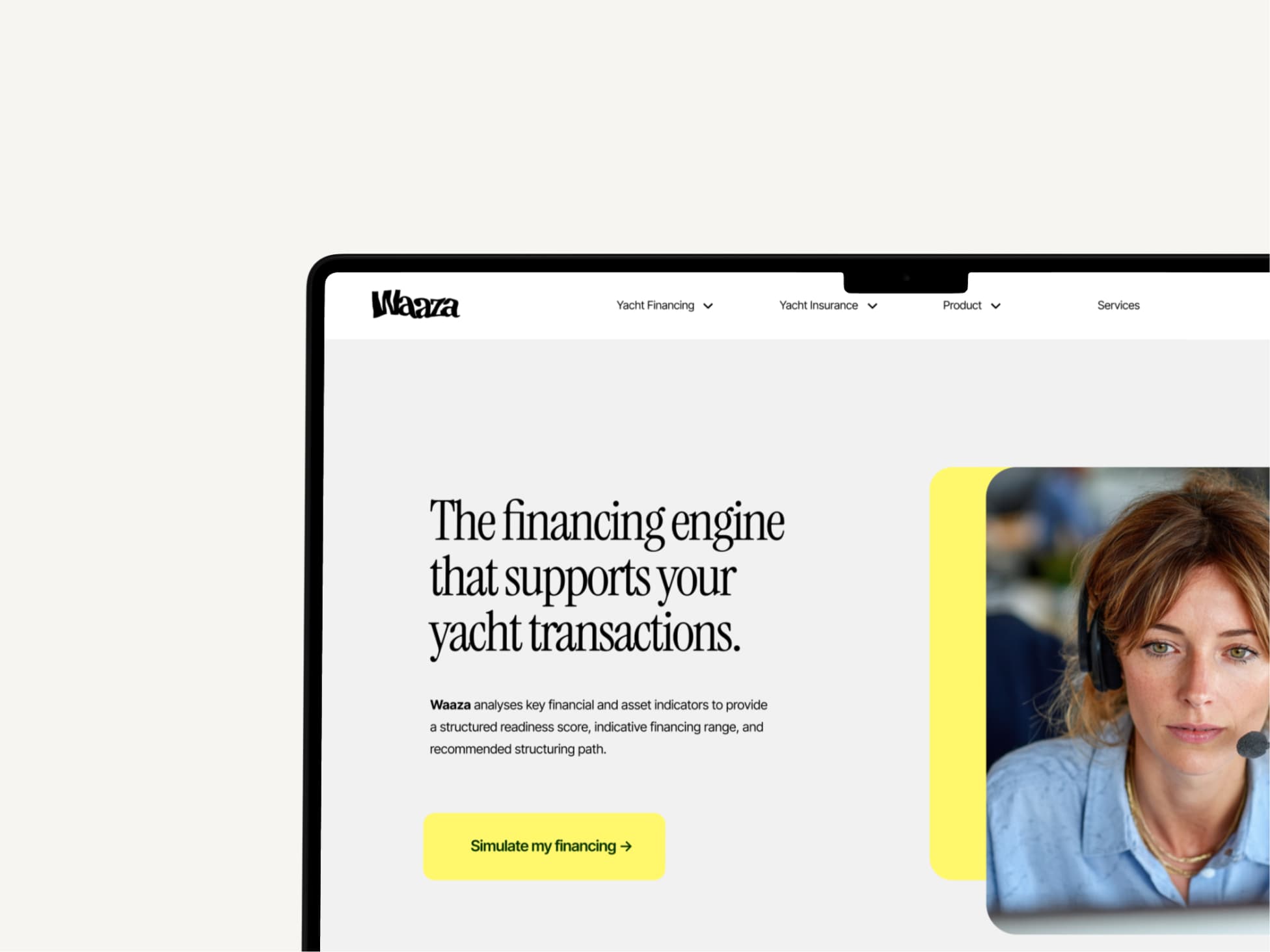
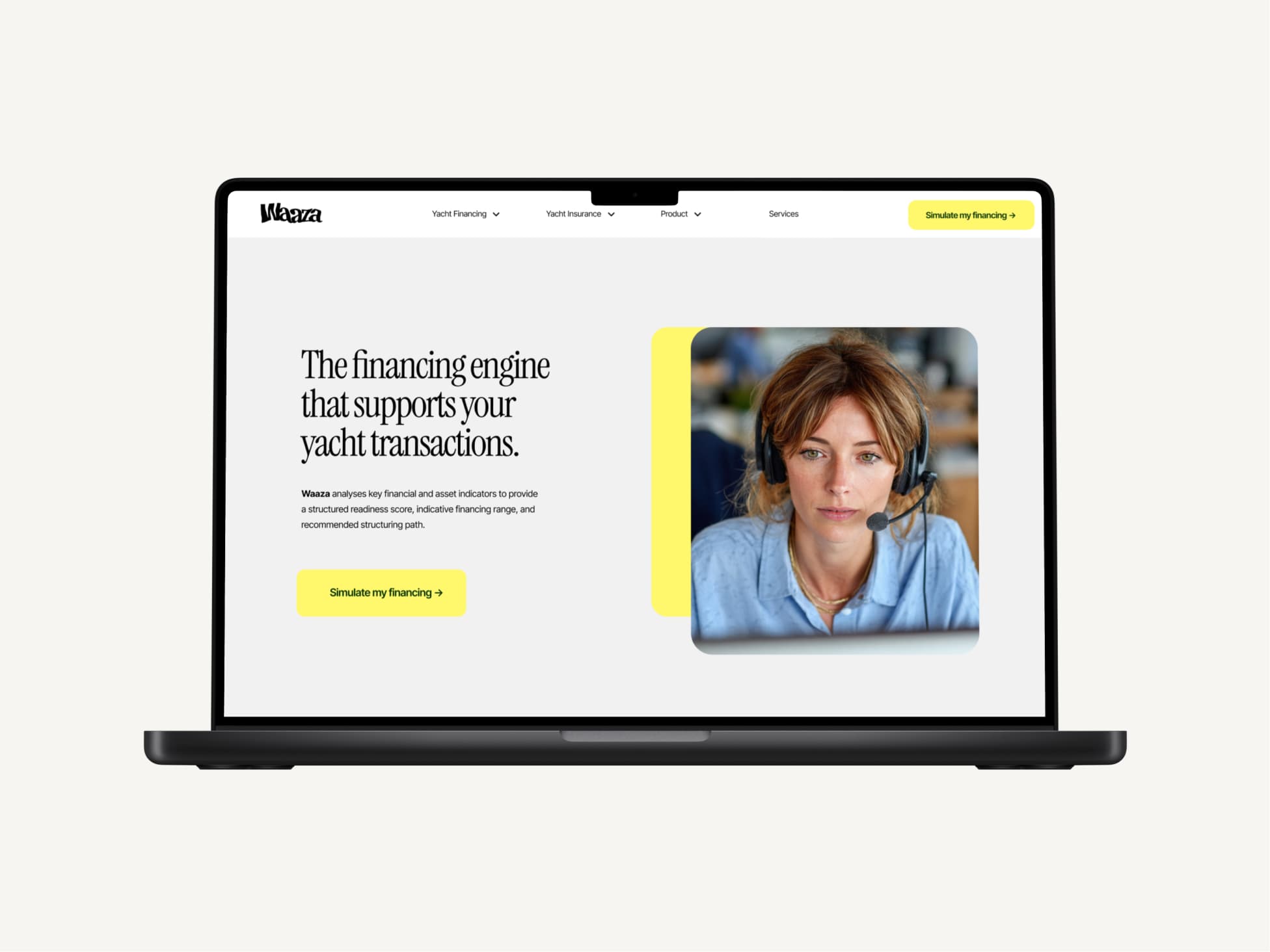
Waaza is a financing intelligence product for the boat market. It helps buyers, brokers, and operators understand what a realistic financing path looks like for a specific vessel — quickly, clearly, and in a format that can move a case forward.

Marine finance decisions are shaped by borrower affordability, deposit expectations, vessel suitability, and documentation requirements. That early conversation is typically slow and repetitive. Waaza standardises it: capture the right inputs once, generate an explainable readiness outcome, and produce a clean next-step package.

Product Strategy · UX/UI · Financial Workflows · API Design · Embed Architecture
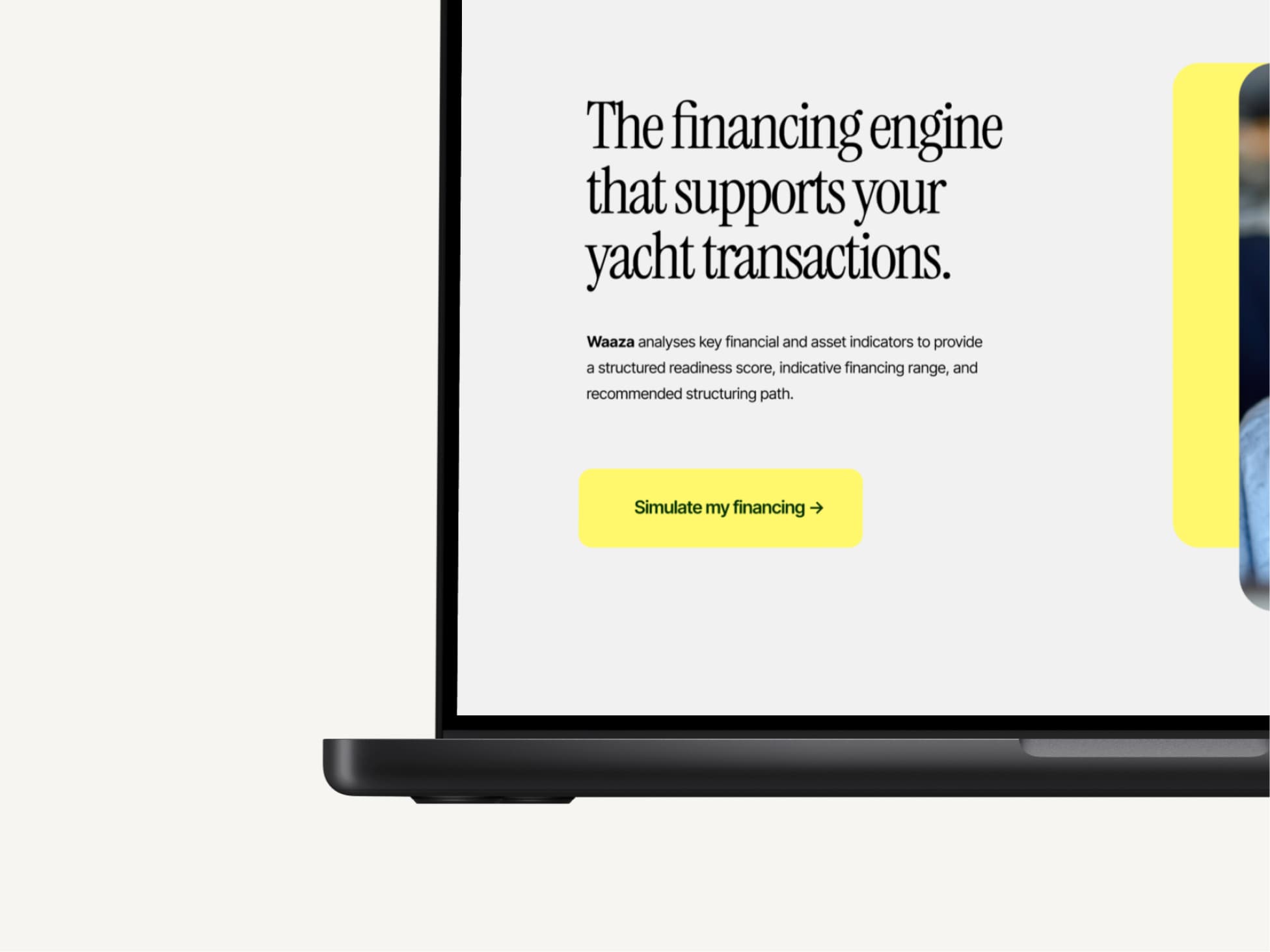
Waaza visual 1
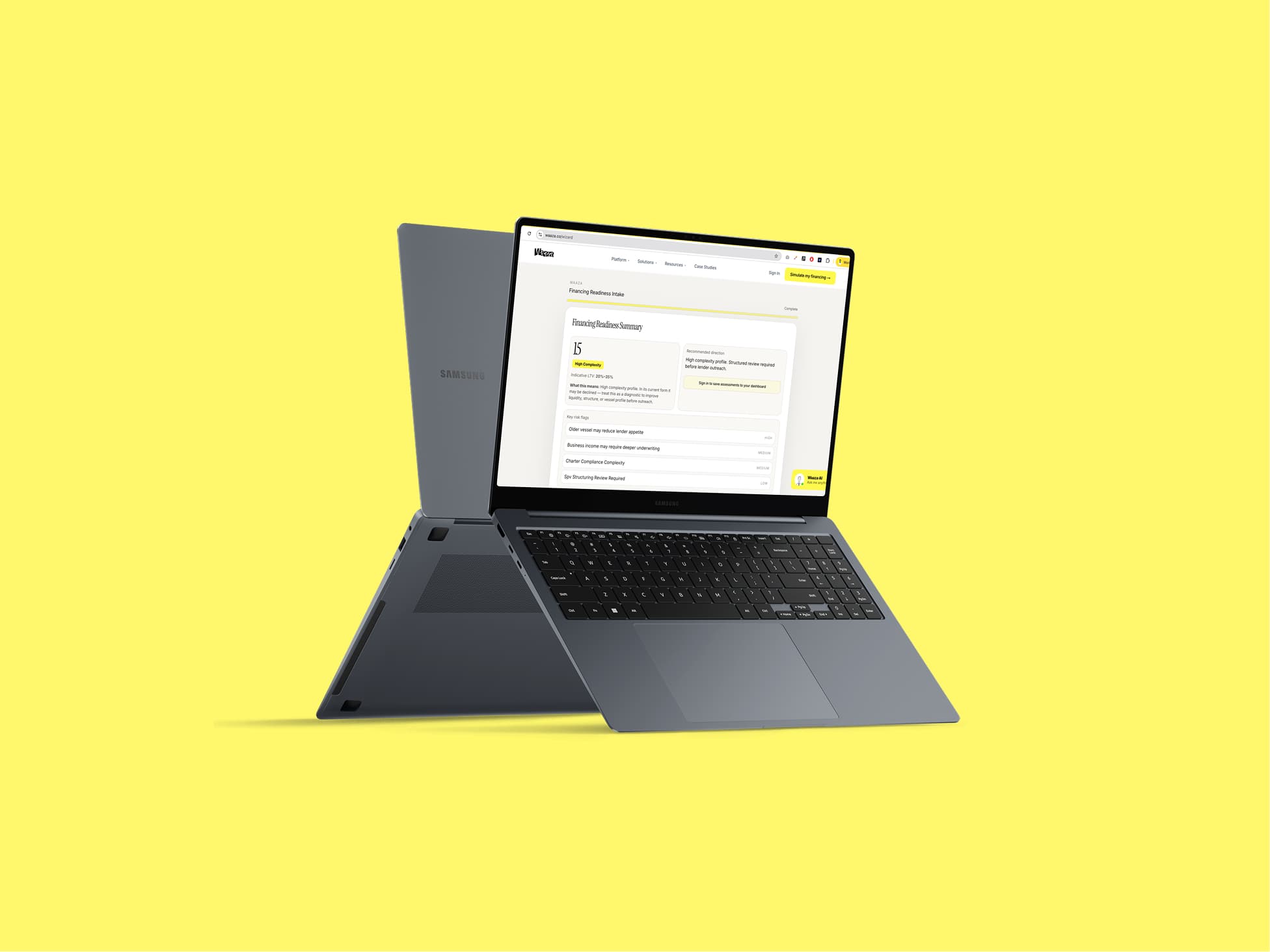
Waaza visual 2
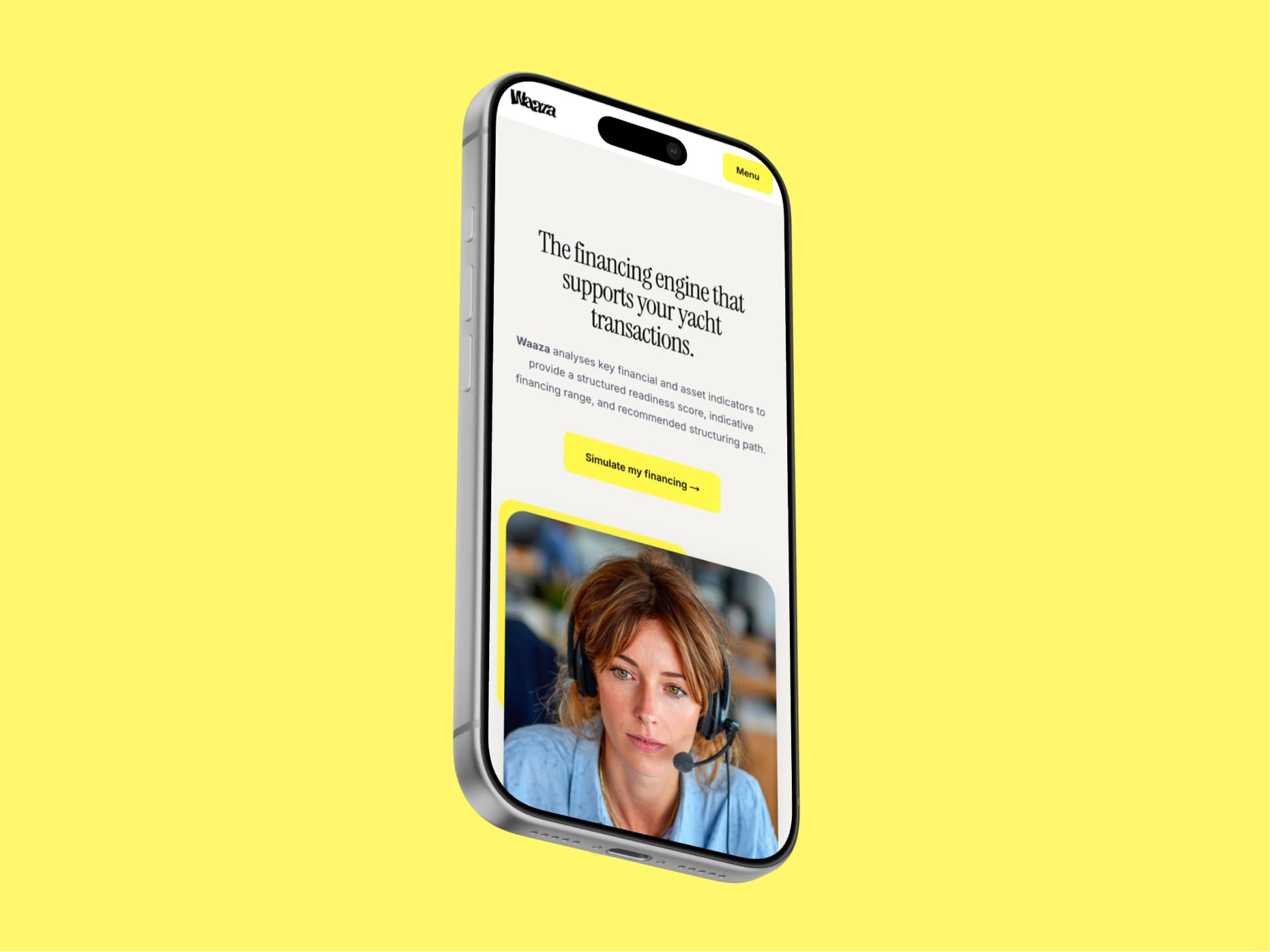
Waaza visual 3
Waaza visual 4
Deep dive01 / 16
01

The problem

The early finance conversation in boat buying is messy. Buyers want clarity on affordability before committing. Brokers repeatedly qualify the same information across leads. Cases stall because requirements, vessel constraints, and documentation expectations aren't surfaced early enough. The result is predictable friction: slower decisions, more admin, and inconsistent case quality reaching lenders.

Waaza — Finance friction in boat buying
02

Strategic framing

I framed Waaza around a single insight: the first job isn't to quote precisely — it's to make the financing pathway legible. Marine finance varies by lender appetite, vessel specifics, and documentation, so designing for false precision would undermine trust. Instead, I optimised the product around usefulness, clarity, and early constraint surfacing — giving brokers something they can act on immediately.

Waaza — Strategic framing
03

Assessment flow

I designed a guided intake that captures the minimum viable information needed to generate a meaningful first signal. Three input layers — buyer profile, boat context, and deal intent — each designed to feel fast and confident. No unnecessary steps, no form fatigue. The flow respects the user's time while producing structured data the system can reason about.

Waaza — Assessment flow
04

User journey map

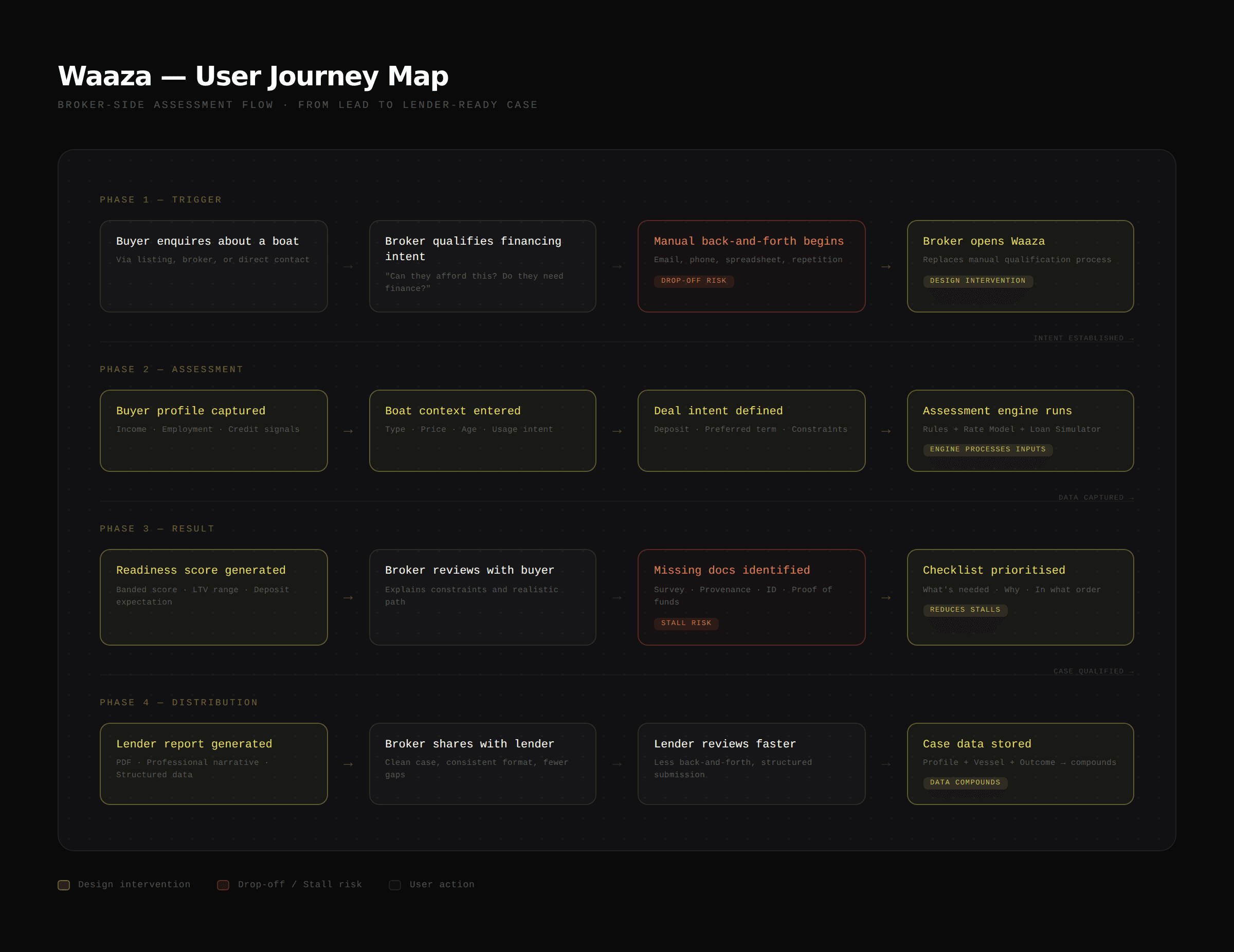
I mapped the end-to-end journey from ‘interest’ to ‘finance-ready’ to find where cases actually stall. The key gap wasn’t calculation — it was uncertainty. The journey map made that visible: what the buyer needs to feel confident, what the broker needs to progress, and where documentation becomes the real bottleneck. That’s why Waaza is designed as a pathway tool: surface constraints early, produce a clear next-step checklist, and keep the case moving without turning into an email thread.

Waaza — User journey map
05

State machine

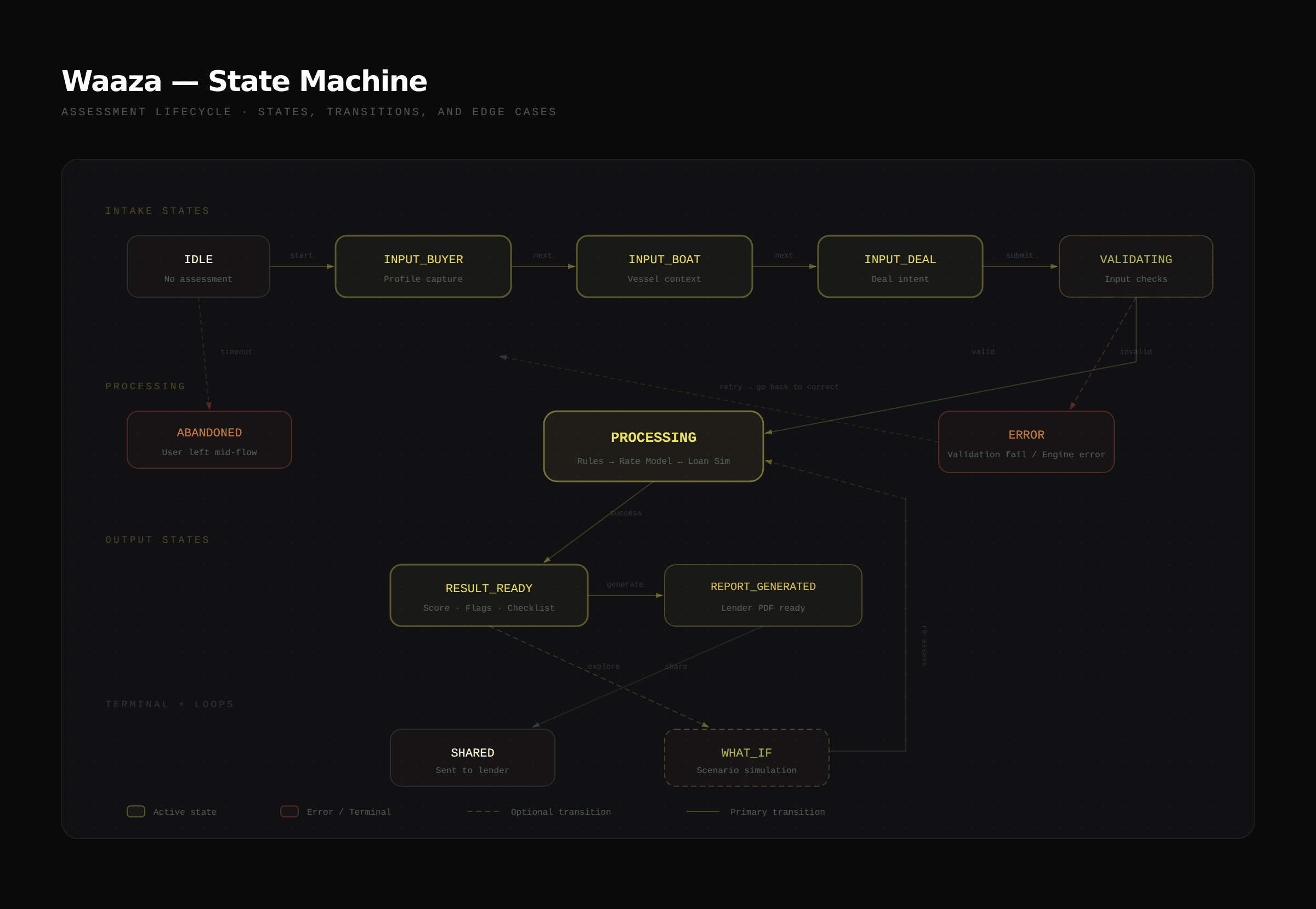
Finance flows fail when state is ambiguous. I designed the core workflow as explicit states: inputs captured → readiness computed → flags raised → docs requested → report produced → case progressed. This makes the product predictable, auditable, and easier to integrate. The state machine is the reliability layer: it prevents ‘half-finished’ cases, supports clear error recovery, and keeps the output trustworthy — especially when data arrives asynchronously.

Waaza — State machine
06

Information architecture

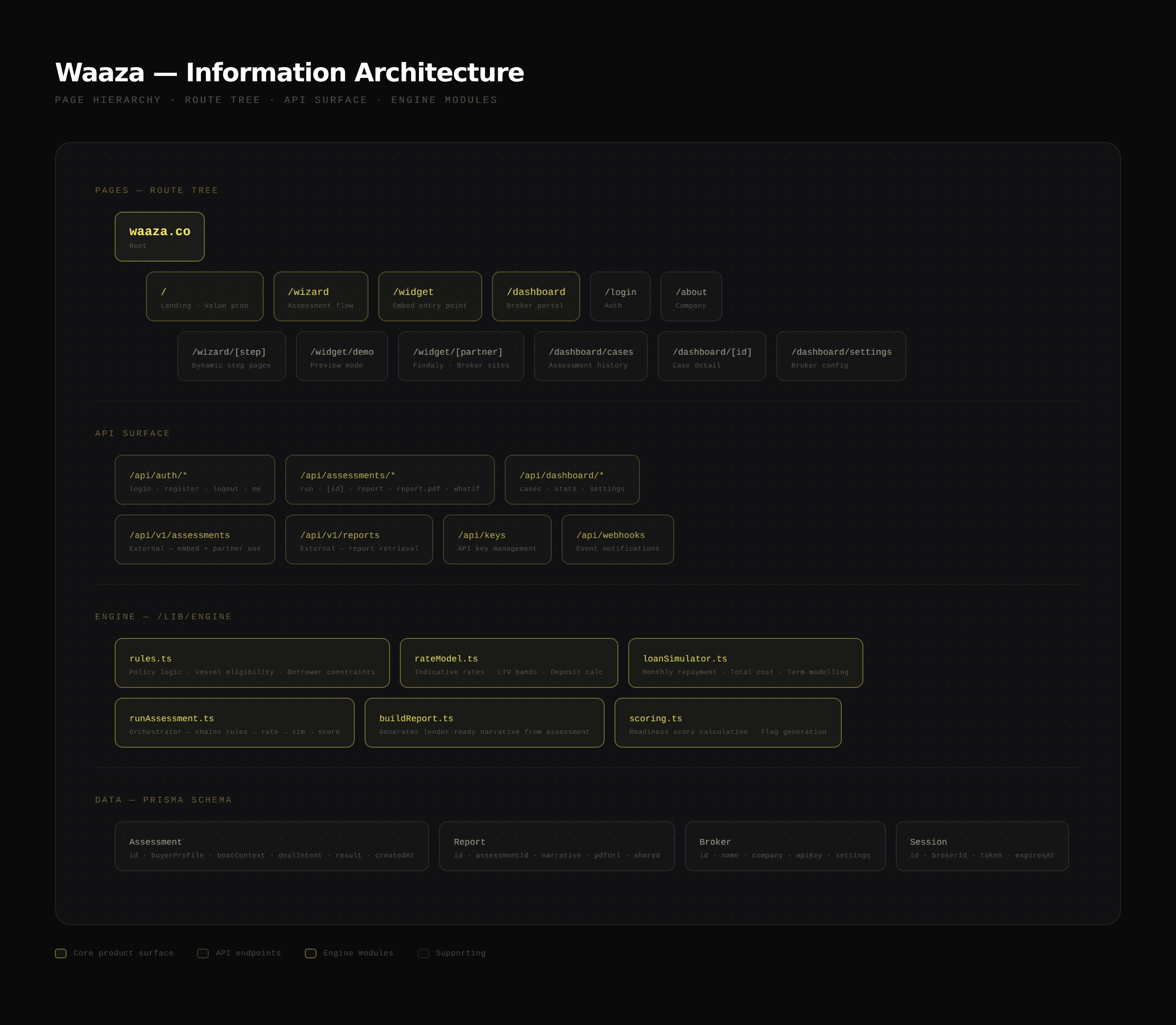
Waaza’s information architecture is built around decision-making, not data dumping. The layout follows a strict hierarchy: outcome first (score + bands), then why (flags + constraints), then what next (checklist + docs). This is designed for real broker conversations: the UI needs to support explanation and progression, not just display. The IA enforces that by making the ‘next step’ unavoidable and the ‘why’ always accessible.

Waaza — Information architecture map
07

Data flow

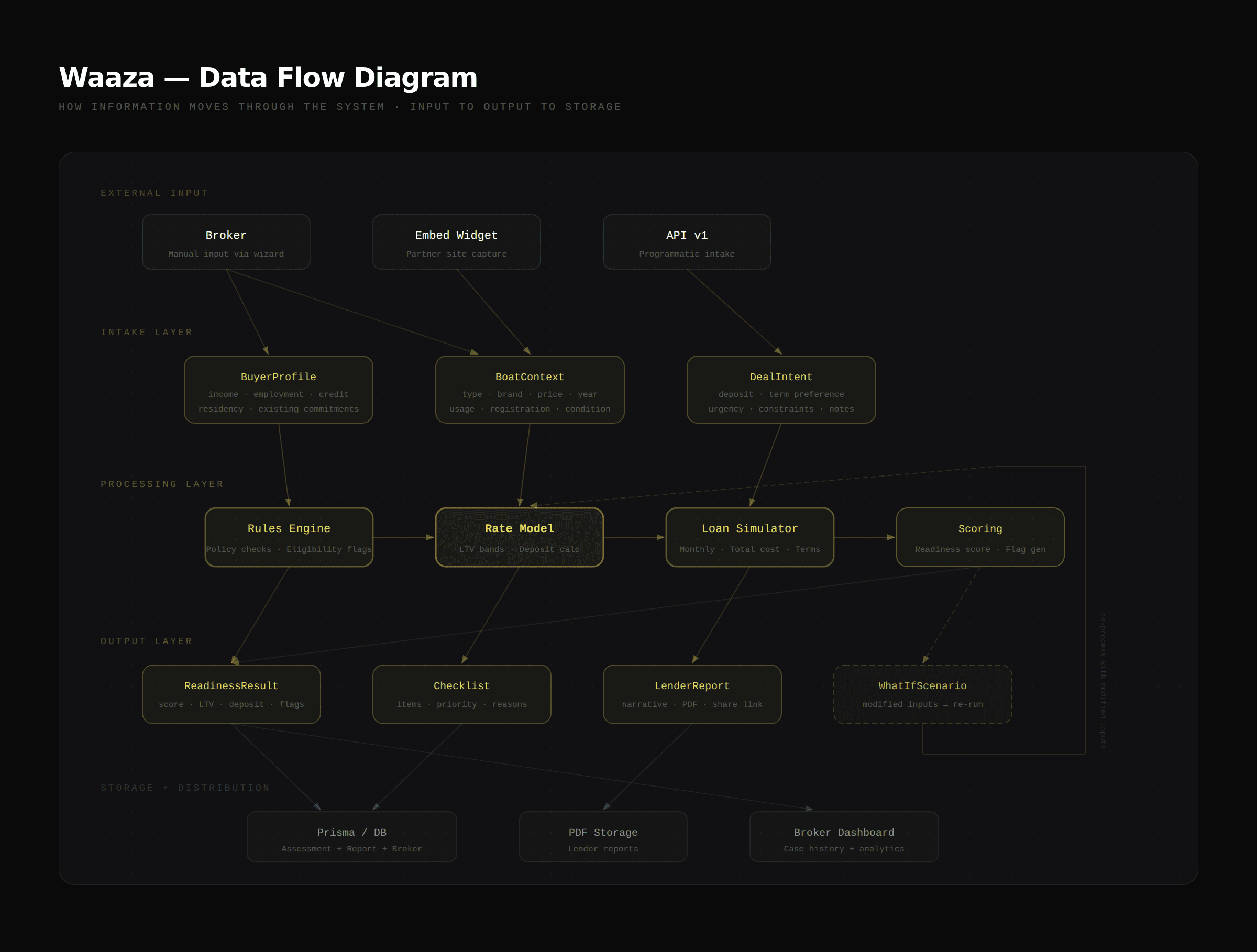
I treated the data flow as a product surface: what inputs we collect, how they transform into a readiness signal, how they map into report outputs, and what can be reused later for routing and analytics. The key design decision: capture the minimum viable inputs to create a meaningful first signal, then structure everything so the platform can compound — deeper simulation, lender routing, and smarter policy logic — without redesigning the foundation.

Waaza — Data flow diagram
08

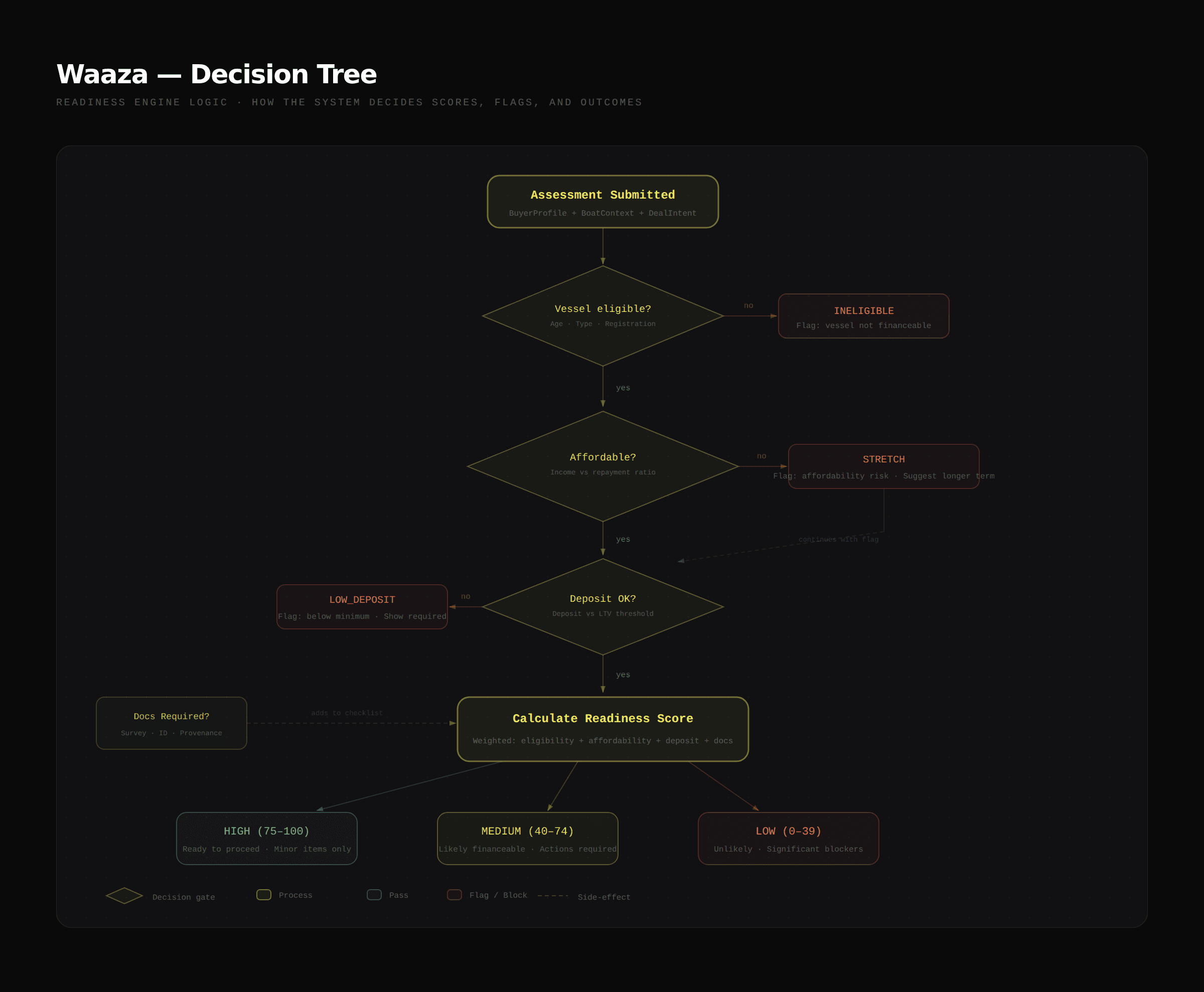
Decision tree

Waaza isn’t a black box. I modelled the decision tree that drives the readiness output so it remains explainable: each score movement, each risk flag, each constraint is tied to a legible rule. That’s how you build trust in finance workflows. The user doesn’t need ‘perfect accuracy’ — they need to understand what’s driving the outcome and what to do next. The decision tree makes the logic transparent and extensible.

Waaza — Decision tree
09

Readiness outcome

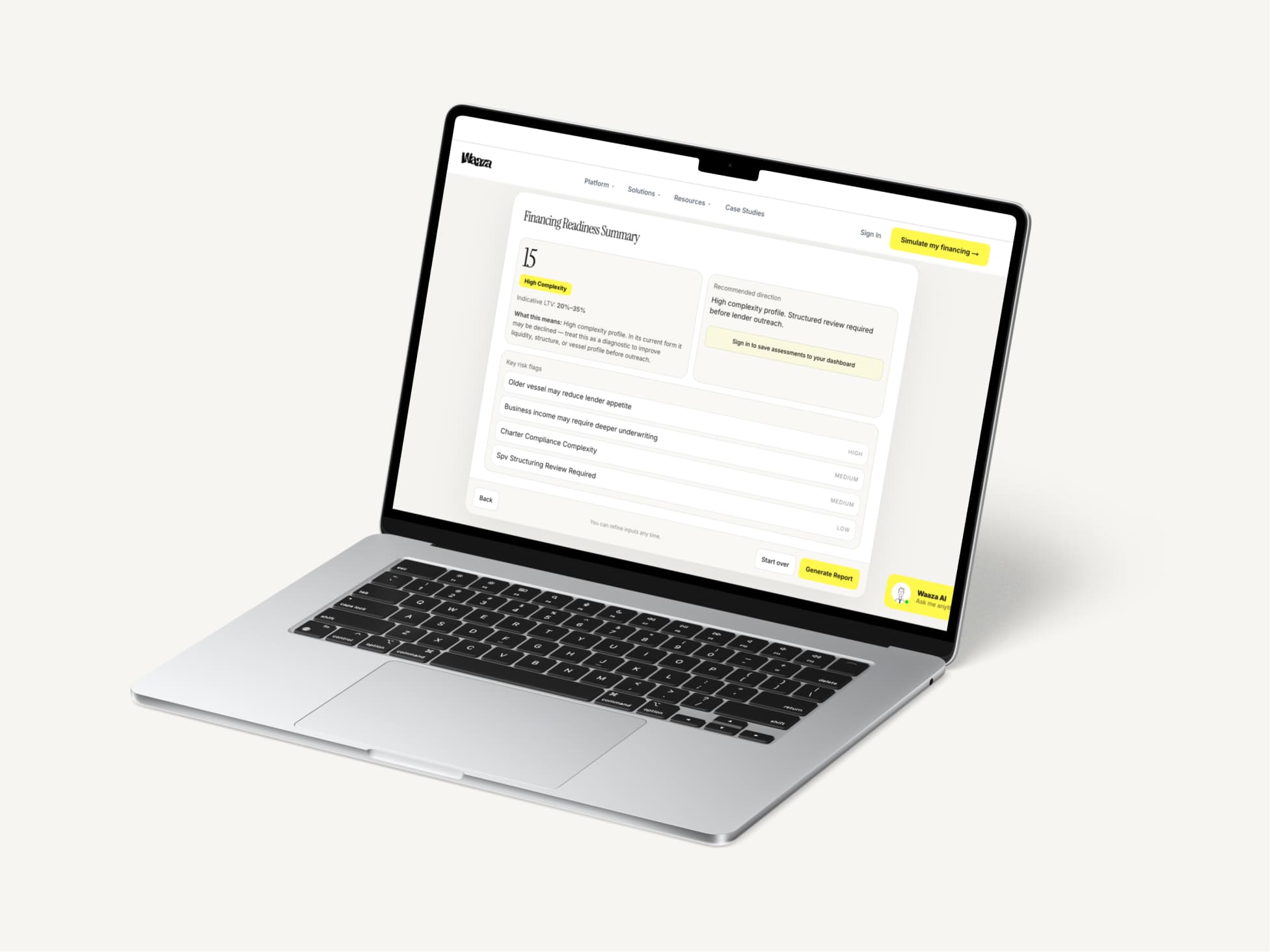
Waaza doesn't output a black box. It produces an explainable result: a readiness score, indicative LTV and deposit expectations, constraint flags that identify what could block financing, and a prioritised checklist of what's needed to progress. Everything is framed as indicative and actionable — not 'instant approval'. The design language supports the authority of the outcome: calm, structured, and shareable.

Waaza — Readiness result
10

Designed for conversation

The score, flags, and checklist aren't decorative — they're built to support what brokers actually do next: explain, qualify, request missing information, and progress the case. I designed every output element around the downstream conversation, not the upstream data model. That's the difference between a dashboard and a tool people use.

Waaza — Conversation-driven design
11

Lender-ready reporting

The assessment generates a shareable report that translates the result into a professional narrative: case summary, what supports financeability, what needs resolving and why, and documentation requirements aligned to common marine finance processes. This makes the output usable with both buyers and lenders, and cuts the avoidable loops that slow cases down.

Waaza — Lender-ready report
12

UI as trust signal

This is a financial workflow product — the interface needs to read as credible, not playful. I designed around hierarchy, restraint, and clarity. Typography carries the weight. Data is presented in banded ranges rather than false-precision decimals. Every visual choice was made to support the authority of the output, because in finance, how something looks directly affects whether it's trusted.

Waaza — UI credibility
13

Embed + API surface

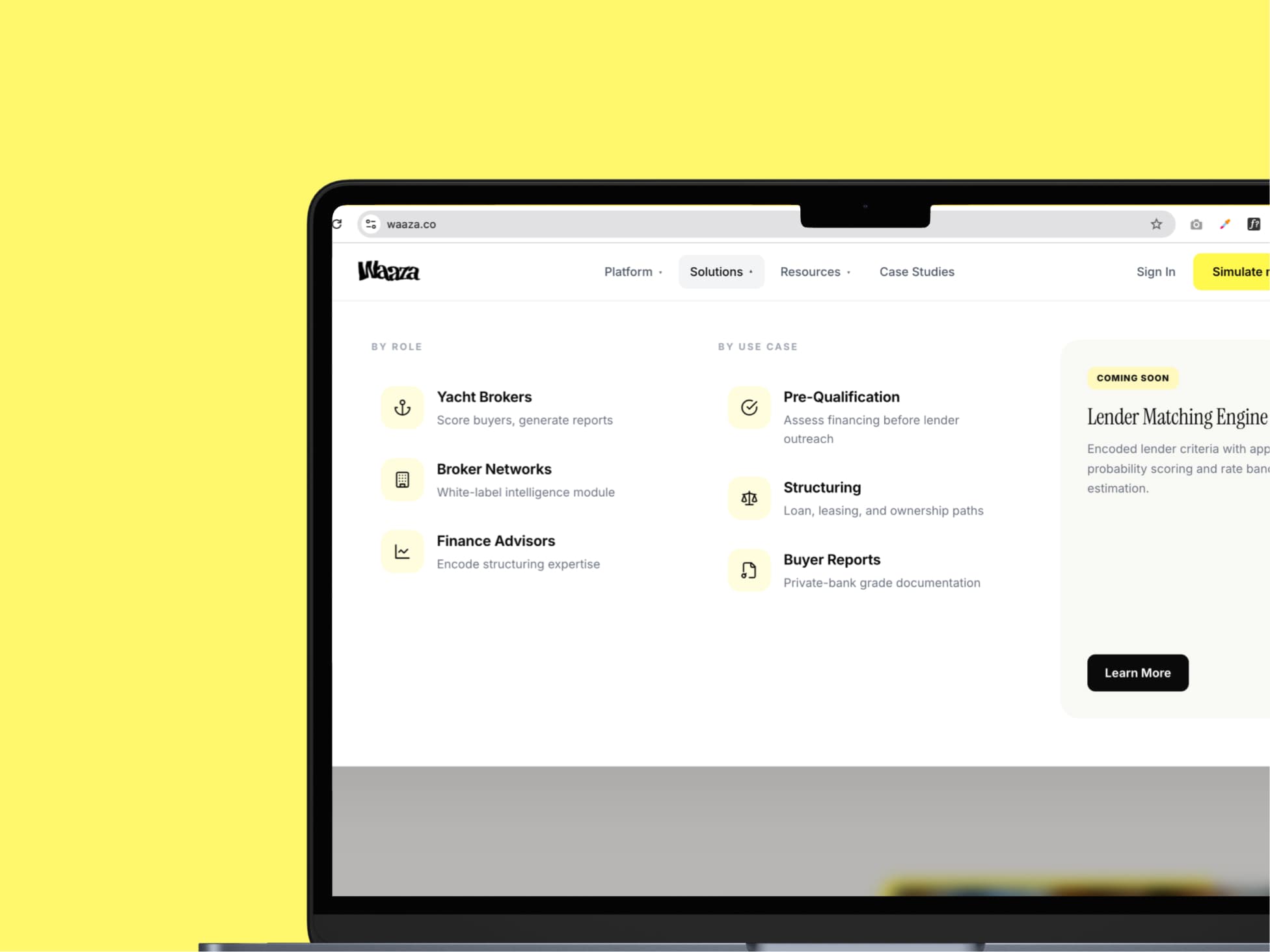
Waaza is built to live inside existing broker ecosystems, not just standalone. I designed an embeddable widget for broker sites — functioning as both lead capture and pre-qualification — alongside an API-first architecture for future integrations into CRMs, listings platforms, and internal broker tooling. This turns the product into workflow infrastructure, not a one-off calculator.

Waaza — Embed architecture
14

System architecture

Waaza is built as a structured pipeline — from guided intake to explainable scoring to report generation — designed to be embeddable and API-first. The architecture separates assessment inputs, decision logic, and outputs so brokers can integrate it into existing ecosystems without turning the product into a one-off calculator.

Entry Points
Intake Layer
Assessment Engine
Outputs
Distribution + Storage
BrokerPortal / Embed
BuyerDirect / Widget
API Clientv1 Endpoint
Assessment Wizard
Embed Widget
Readiness Engine
Rules
Rate Model
Loan Sim
Readiness ResultScore + Flags
Lender ReportPDF / Share
What-If Scenarios
Broker DashboardCases + History
ChecklistNext Steps
Case DataPrisma / DB
AuthLogin / Keys
Data flow
Engine core
Feedback loop
15

Compounding by default

Each assessment creates structured case data — profile, vessel, constraints, outcome — which sets up future iteration: deeper scenario simulation, lender routing, smarter policy logic, and portfolio-level analytics. I designed the data model to compound, not just serve the current feature set. The wedge is narrow, but the architecture is wide.

Waaza — Compounding data model
16

Outcome

Waaza shipped as a working financing intelligence product — not a loan calculator, not a lead form. A structured system that turns finance ambiguity into an actionable workflow. Brokers use it as the default pre-qualification step. Buyers get earlier clarity on what's realistic. Lenders receive cleaner, more consistent cases with fewer missing pieces. One product replacing a process that used to live in emails and spreadsheets.

Waaza — Shipped product outcome
Next project
Kompi.App cover

Founder · Built · Launched · 2025

Kompi.App·Creator Platform