Kompi — link intelligence
Designing a link intelligence platform as a cohesive product system
Kompi didn’t start as a link shortener. It started as an observation about how fragmented modern distribution has become.
Links, QR codes, bio pages, campaigns, and SEO all live in separate tools, despite describing the same underlying behaviour: people clicking from one place to another with intent. Each tool captures a sliver of that journey, but none of them form a complete picture. As a result, creators and teams are forced to stitch together their own systems, usually with workarounds and guesswork.
Kompi is my attempt to collapse that fragmentation into a single, coherent product system — one where every way someone enters a link, scans a code, or lands on a page feeds the same underlying intelligence layer.
Early on, I made a deliberate decision to stop thinking in terms of “features” and start thinking in terms of entry points.
A short link, a QR code, and a link-in-bio page are not different products. They are different interfaces into the same distribution engine. Treating them separately is what leads to duplicated analytics, inconsistent branding, and broken mental models.
In Kompi, everything begins with a link object. That object can be shared directly, embedded in a page, encoded into a QR code, or grouped into a campaign. The user never has to relearn the system, because they’re always working with the same underlying entity.
This shift is subtle, but it’s foundational. It’s what allows Kompi to expand without feeling like a bundle of unrelated tools.
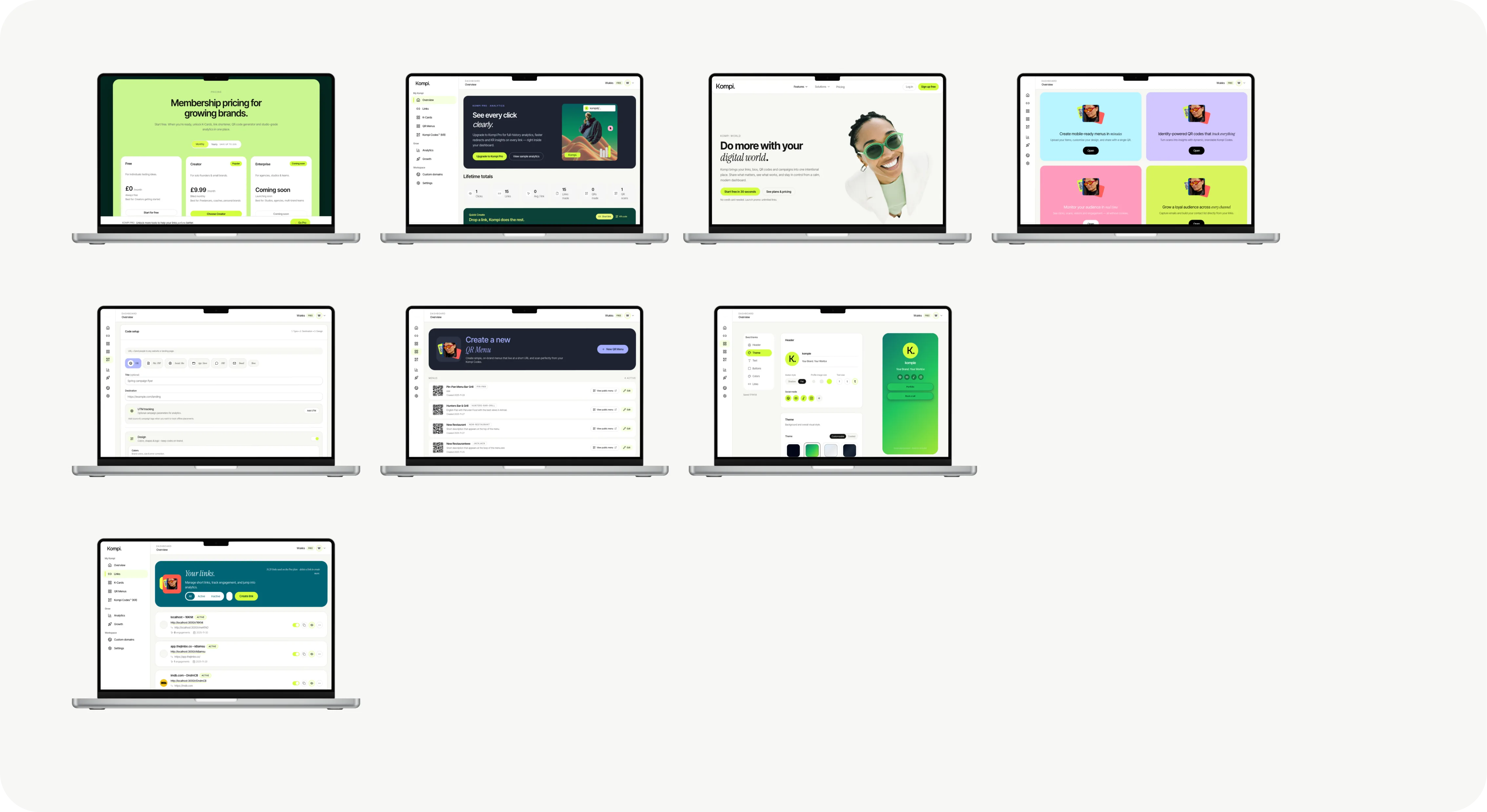
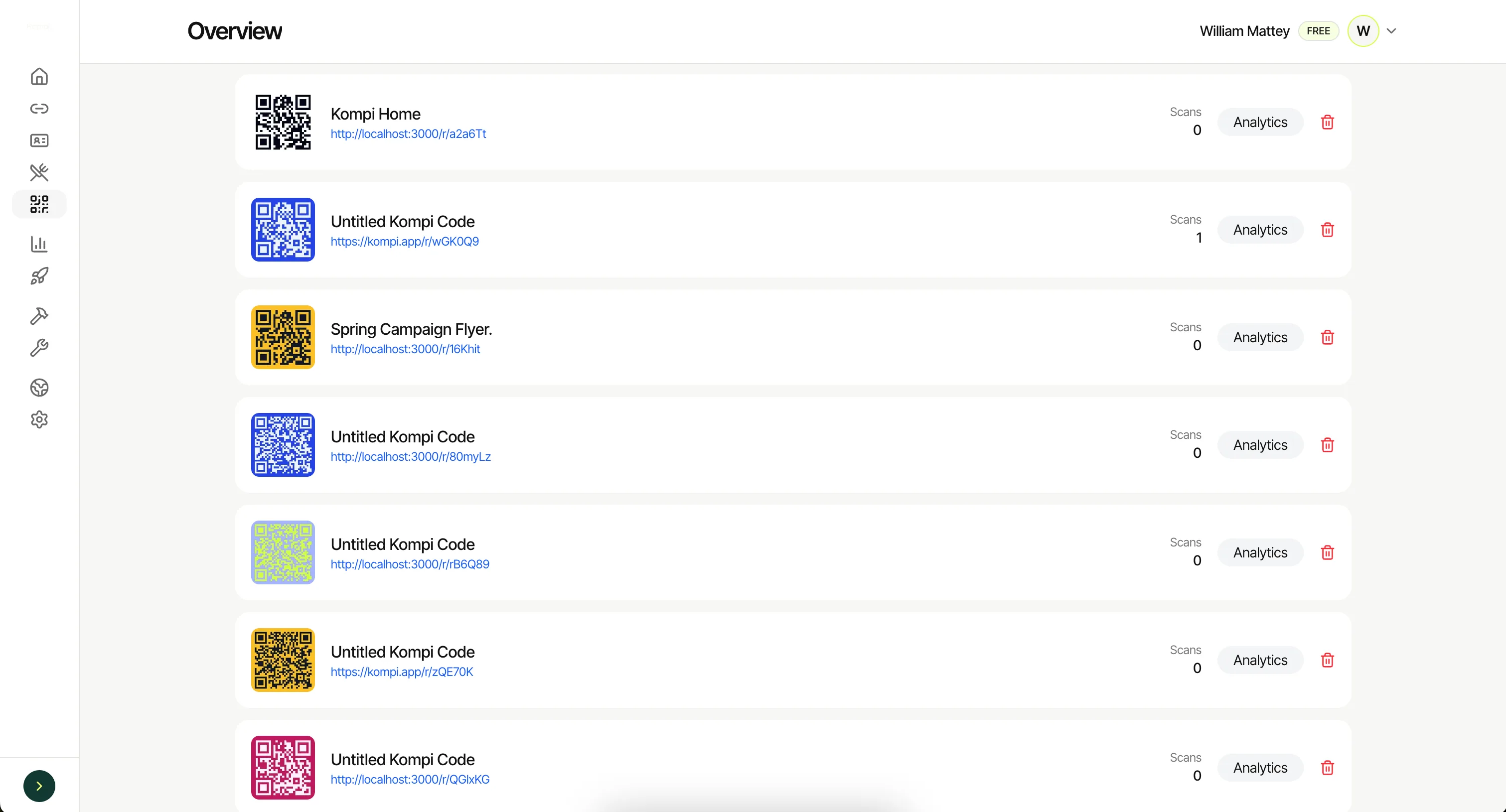
Most platforms treat QR codes as exports — something you generate once and forget. I intentionally designed Kompi’s QR functionality to behave differently.
A Kompi QR code is not a static image. It’s a live distribution surface tied directly to a link’s lifecycle. When someone scans a code, the interaction is logged the same way a click is logged. Location, device context, and time all feed back into the same analytics stream.
From a design perspective, this meant QR codes needed to live inside the product, not at the edges. They inherit branding, can be regenerated without breaking the destination, and remain measurable long after they’ve been printed or deployed in the real world.
This approach bridges physical and digital distribution in a way most link tools never attempt — and it reinforces the idea that Kompi is about intelligence, not just redirection.
I approached link-in-bio pages with the same philosophy. Instead of creating a standalone “creator page” tool, I designed Kompi bio pages as compositions of existing link objects.
That decision has several implications. Analytics remain consistent across contexts: a click from Instagram into a bio page, then out to a campaign link, is still part of the same story. Branding remains unified. Links don’t have to be duplicated or reconfigured just to live on a page.
From a UX standpoint, this reduces friction significantly. Users aren’t switching modes or tools. They’re arranging and presenting the same assets in different ways.
From a system standpoint, it means bio pages benefit automatically from improvements elsewhere in the platform — better analytics, smarter redirects, improved SEO — without requiring parallel development.
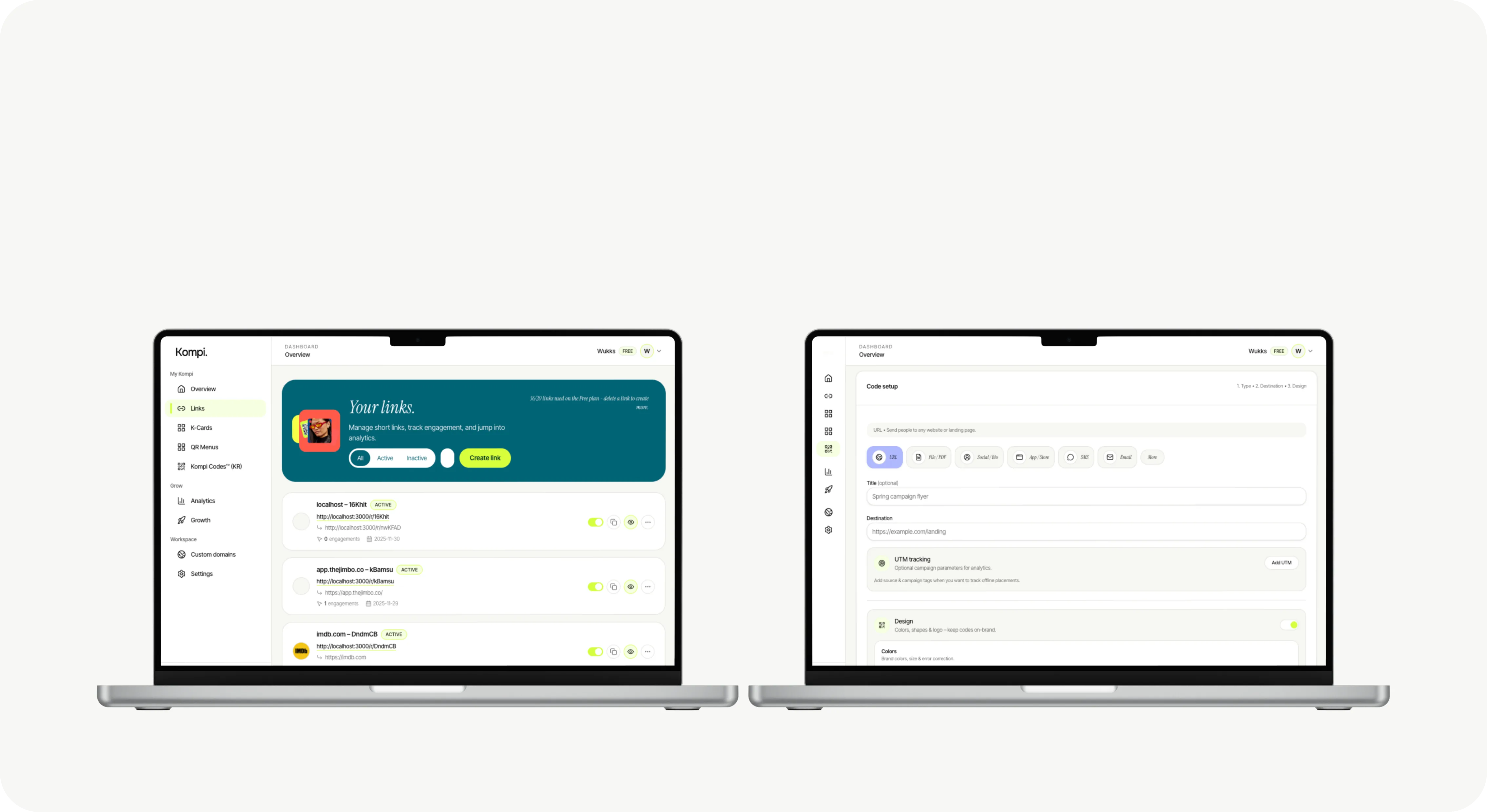

As Kompi evolved, it became clear that the product wasn’t a single application, but a suite of tightly related tools sharing one foundation.
Rather than shipping these as disconnected features, I designed them as modules that sit on top of the same analytics and identity layer. Kompi Links, Kompi Bio, future campaign tracking, and form-based tools all speak the same language internally.
This modularity is intentional. It allows the product to grow horizontally without bloating the core experience. Users can adopt Kompi at the level they need — a single short link or a full distribution workflow — without the interface or mental model collapsing under complexity.
From a design perspective, this required discipline. Every new tool had to justify its place in the system. If it didn’t reinforce the core philosophy, it didn’t ship.
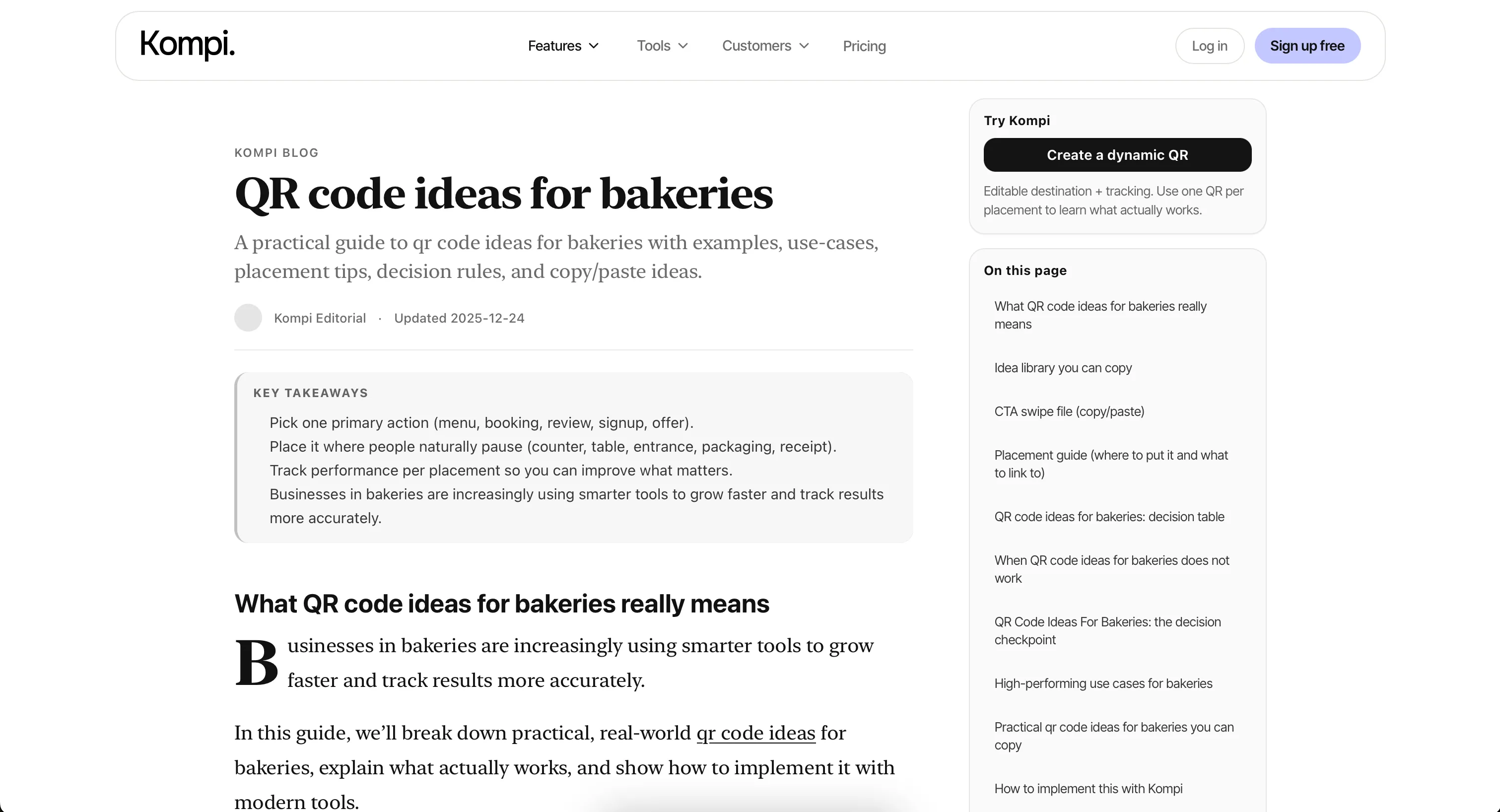
SEO is often treated as a marketing concern applied after the fact. In Kompi, it’s embedded directly into the product architecture.
Public bio pages are server-rendered, indexable, and structured with clean metadata. Short links resolve quickly and predictably, with no unnecessary hops or script overhead. Open Graph data is handled intentionally so shared links look deliberate, not generic.
More importantly, Kompi avoids the SEO pitfalls common to link tools: thin pages, duplicated content, and opaque redirects that erode trust. Every public-facing surface is designed to be legible not just to users, but to search engines.
This approach reflects a broader belief that SEO is not about gaming algorithms. It’s about designing systems that are clear, fast, and honest in how they present information.
One of the hardest problems in Kompi was maintaining simplicity while designing for expansion.
Workspaces, teams, branded domains, and future enterprise needs all introduce complexity. Rather than hiding that complexity behind arbitrary limits, I designed the product so scale reveals itself progressively. Solo users see a focused experience. Teams see collaboration features appear naturally as their needs grow.
This progressive disclosure is as much a design choice as it is a product strategy. It respects users at different stages without fragmenting the experience.
Kompi is not a collection of clever UI decisions. It’s a demonstration of how I approach product design as a holistic discipline.
It shows how I think about features as systems, about analytics as infrastructure, about branding as trust, and about growth as something that should feel inevitable rather than forced.
QR codes, link-in-bio pages, SEO, analytics, and future tools are not bolted on. They exist because the underlying model supports them. That coherence is the point.
Kompi is still evolving, but its foundation is deliberate. And that foundation reflects how I design: by aligning vision, structure, and execution into a single, scalable product story.